
You know when out of nowhere you suddenly remember something from years ago and can’t stop thinking about it? This is me right now. I was looking through my reviews and realised I have published 20 of them. 20! I can’t believe it either, it feels absolutely surreal.
Thinking about my reviews reminded me of the last time I felt proud of one of my film analyses. I was in my second year at university right before the pandemic hit (still can’t believe I only experienced a year and a bit of university life) taking a module called Reading Film and Television Studies (hope I remember the correct name). The professor for this course was absolutely incredible he was the kind of lecturer whose knowledge and passion for film just captivated you. He remains one of my absolute favourite professors and I hope one day I will get the chance to sit down with him and talk about movies.
In this module, we read ‘The ABCs of Classic Hollywood’ by Robert B. Ray and our assignment was to choose an object from ‘Letter from an Unknown Woman’ and write an essay exploring its importance to the film. I remember being so fascinated by the idea straight away that I had already planned what I would focus on by the end of the seminar.
When I received my essay back I still remember reading the professor’s final comment: ‘a wonderful piece of film analysis’. Now, this might not mean much to others but to me reading that from a professor whom I thought highly of meant a lot and still does.
You’re probably wondering why I’m sharing all this now and it’s simple because writing reviews can sometimes feel overwhelming especially when you’re not sure you’re doing a good job. But thinking back to his comment reminds me that while I might not be perfect I am continuously learning and improving. I sometimes wonder if he read my reviews today what would he say?
Below you will find the essay I wrote exactly as it is. It was tempting to edit and polish it after so many years but I wanted to share it here as it is.
Spiral Stairs
A Letter from an Unknown Woman (1948) follows the story of a 15-year-old girl Lisa Berndle (Joan Fontaine) as she falls in love with a known concert pianist Stefan Brand (Louis Jourdan) in Vienna during 1900. The story shows the desire and affection Lisa has towards him and the challenges they face in their love story as Stefan is a known womaniser and seems to never have eyes for her until one day . The film like numerous films from the 1950s, was adapted by Howard Koch from an epistolary novella by Stefan Zweig during the 1920s and was later directed by Max Ophuls who was one of the most self-conscious stylists in the history of cinema.
Why choose to look into the spiral stairs when there are so many details within the mise-en-scene to look into? It’s simple. It holds its own story within the film. The stairs act as a catalyst for Lisa’s problems and decisions as the director emphasises them through the camera movement and the events that are happening on them. The very first time that a life changing event happens is when Lisa runs from Stefan’s flat and sees her Mother (Mady Christians) with a wealthy gentleman as they make their way up (Figure 1 and Figure 2). Lisa later finds out about her mother’s plan to marry him and move away. This is an important aspect as her fear of separation from her beloved Stefan is what pushes her to run away from her mother and confess her feelings to Stefan.

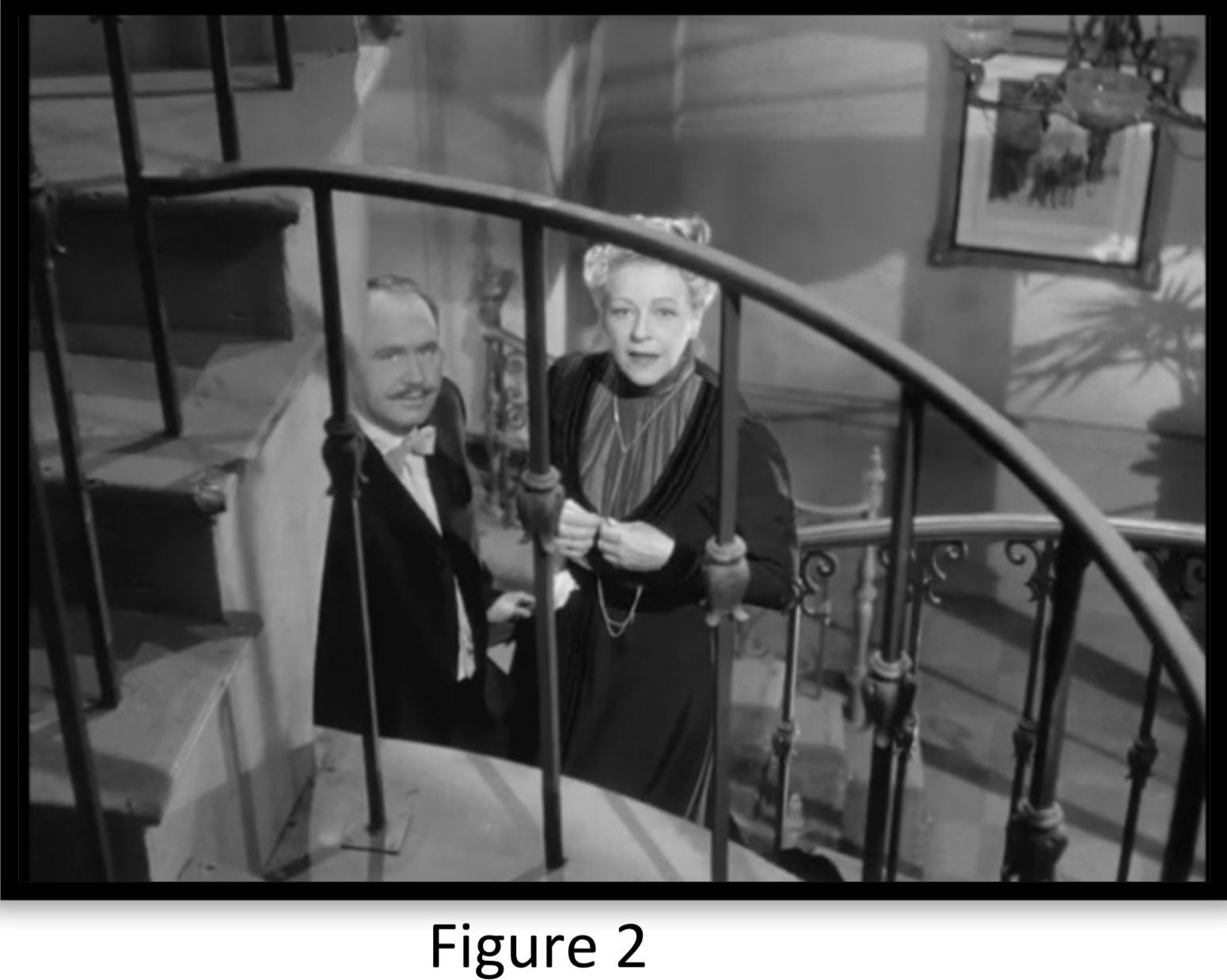
As Lisa finds herself back at the apartment, she soon finds herself waiting for Stefan to come back home. However, he doesn’t come back alone but with one of his many female friends. Whilst we might expect a point-of-view shot (POV) in order to emphasize their emotions especially Lisa’s as she sees him with another woman, the director decides otherwise. We have a high-angle view of not only the spiral stairs but also of Lisa as she watches them from a hidden corner. The shot starts with Lisa watching them come in and pans in a slow swift movement to the right as they make their way up and stills over the stairs. From 23: 44 to 24:35 the camera holds still with no cuts giving the audience nearly a minute of one continuous shot. At no point does director change shots during the scene but rather holds it until we the audience can see Lisa making her way down the stairs and ending with a single shot of the stairs (figure 3-7)
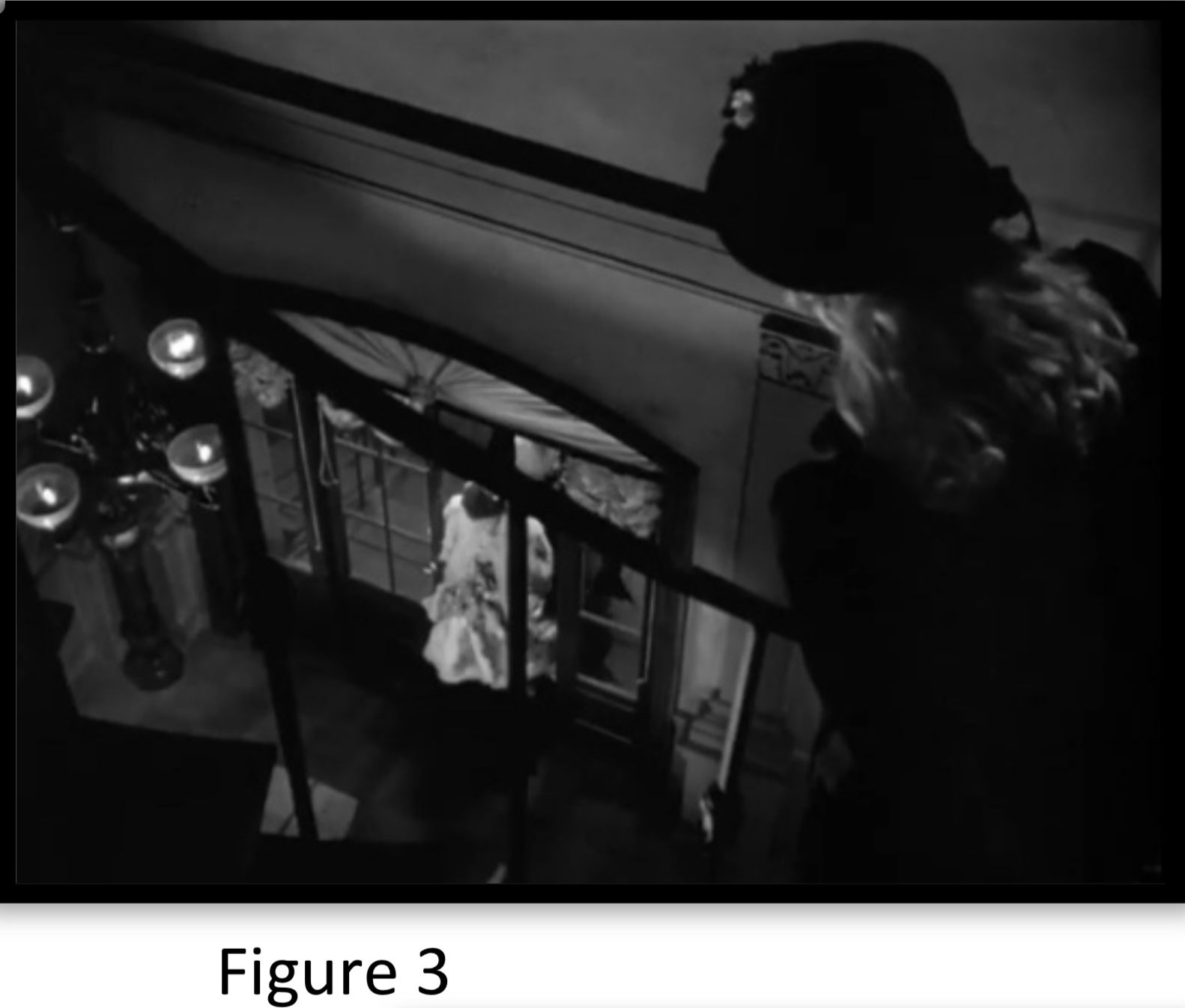

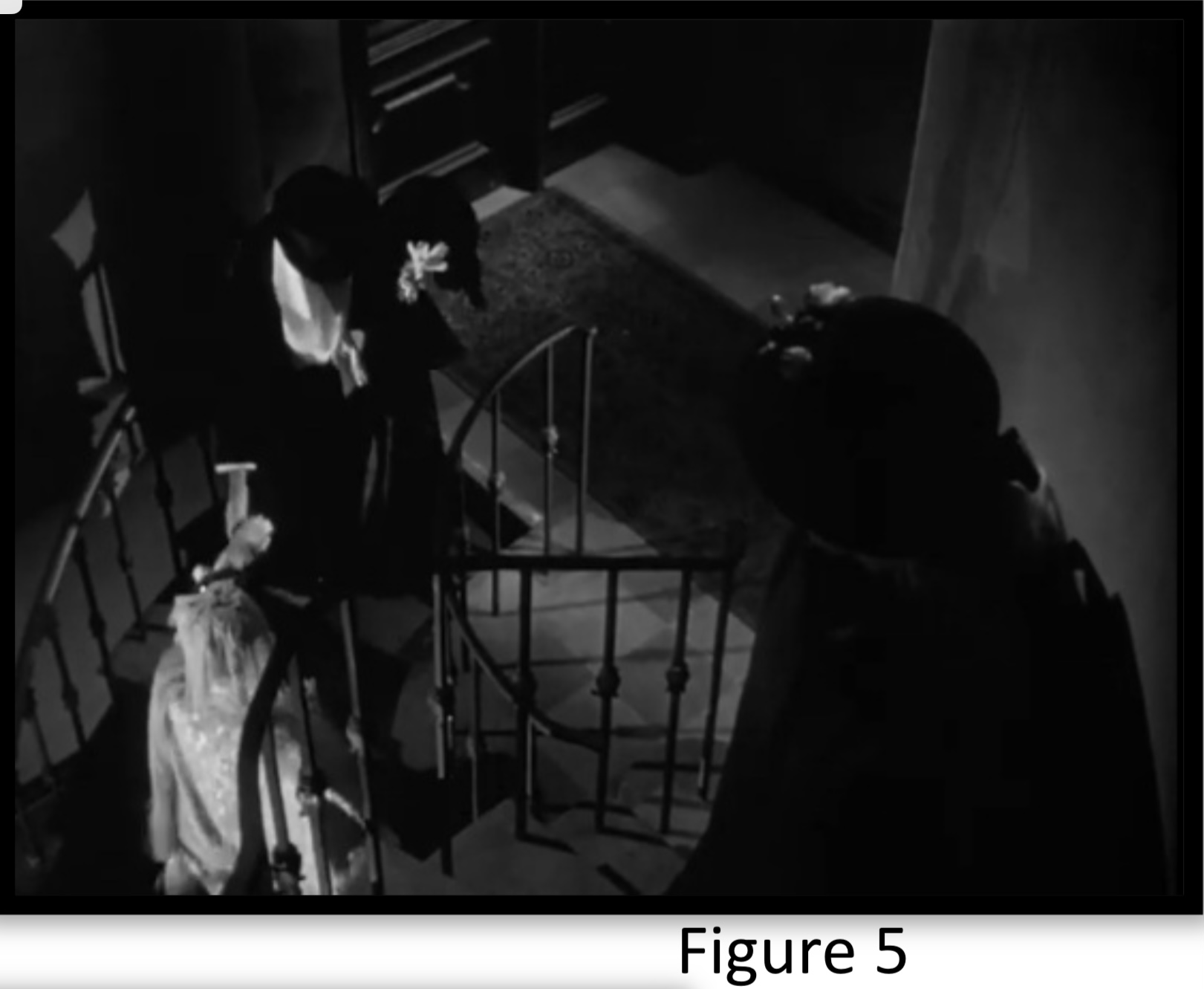

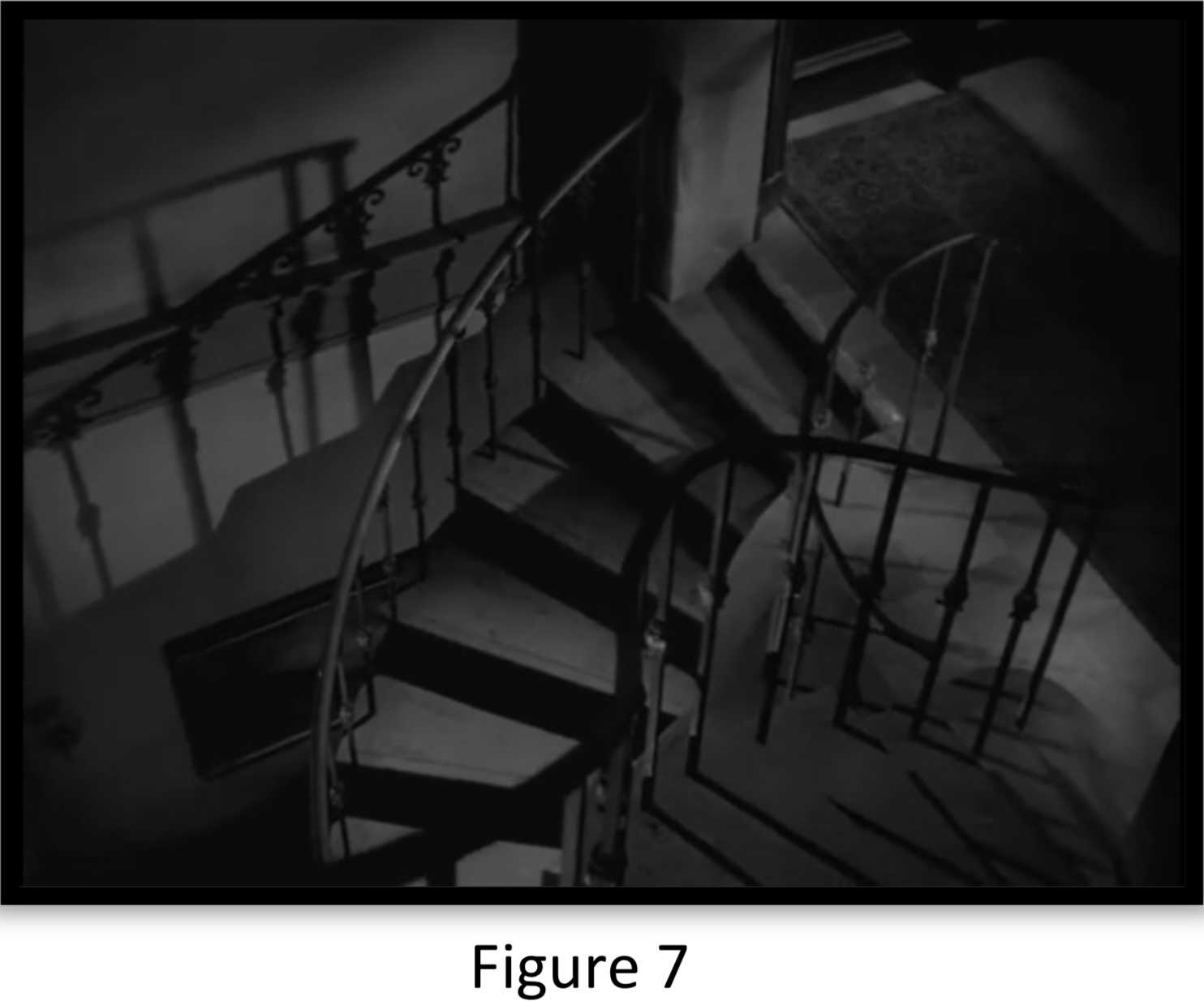
The stairs tell a lot about the characters especially Stefan’s. The fact that the stairs are spiral creates a sense of infinity and an ongoing situation, leaving audience to wonder how many times he has done this before. He later stops at the top of stairs giving his hand to his female companion as a way of seducing her and getting her to come with him inside (figure 5) which highlights how he might have done this many times before, becoming a ritual for him. The fact that Lisa is positioned higher up on the stairs indicates that she has the higher position of what will happen to them as it’s her choice that counts and not his on whether she’ll confess her feelings or not. Towards the end of the shot we see what decision Lisa made as she goes down the stairs in a defeated position with her head down, which is the only time the audience can relate to her pain as she descends the stairs. The fact that the shot ends with only the empty stairs could imply how Lisa has nothing left there for her as she makes her choice to leave Stefan behind and continue with her life.
Max Ophuls left his touch on many other films such as La Ronde (1950) specifically the song La Ronde de L ’Amour (Loves Roundabout) as he seems to have preferred a continuous movement of the camera following the characters rather than having different shots cut and edited together. Choosing this method allows the shot to flow and lets the audience imagine they are present through the camera movement as it looks more realistic as the camera mimics the movements a person would make if present on set. In both films, the director plays with round objects as a way of saying that maybe those problems within the films are so normal and recurring to everyone that they have become a reality that many faces and can relate to.
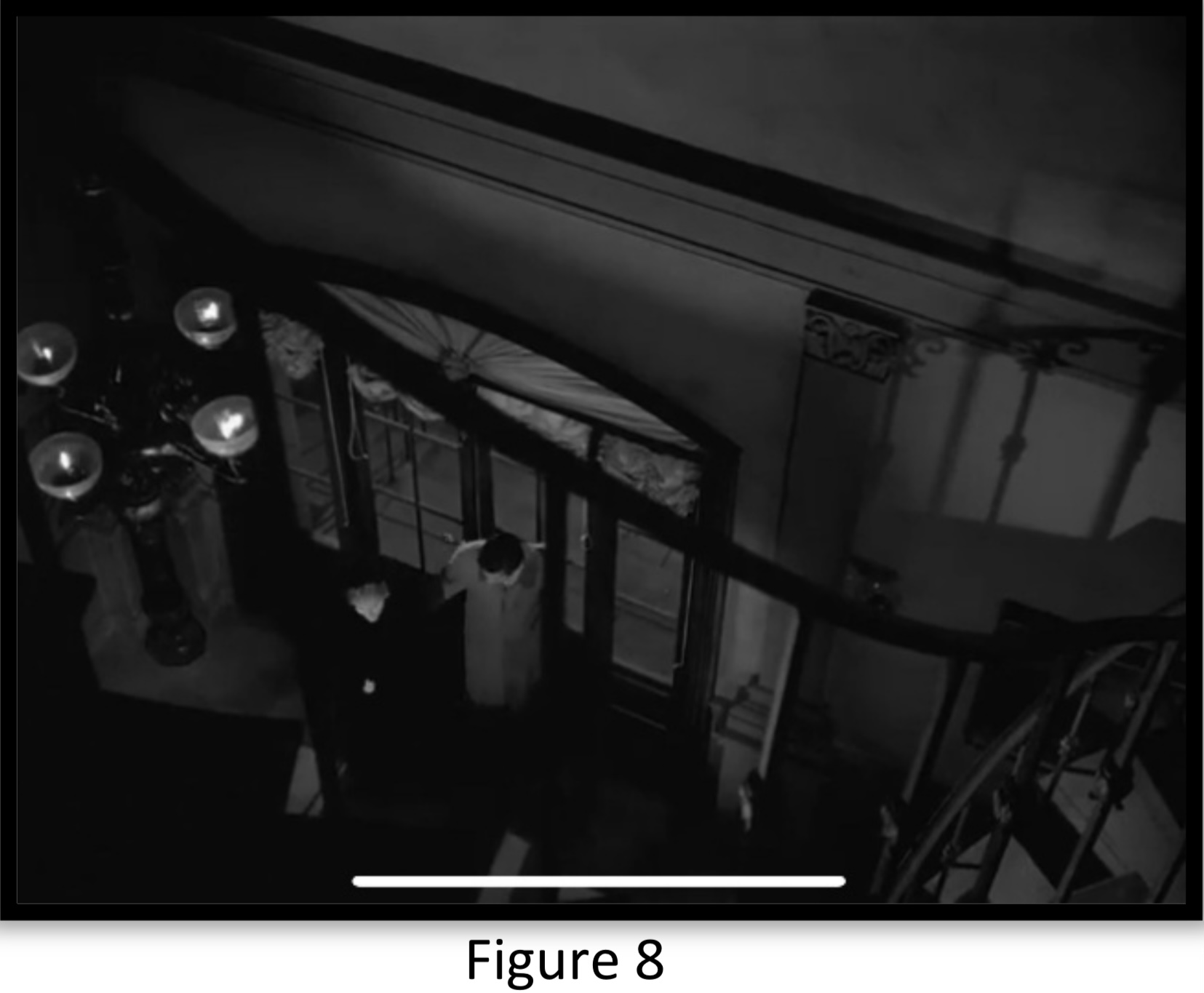
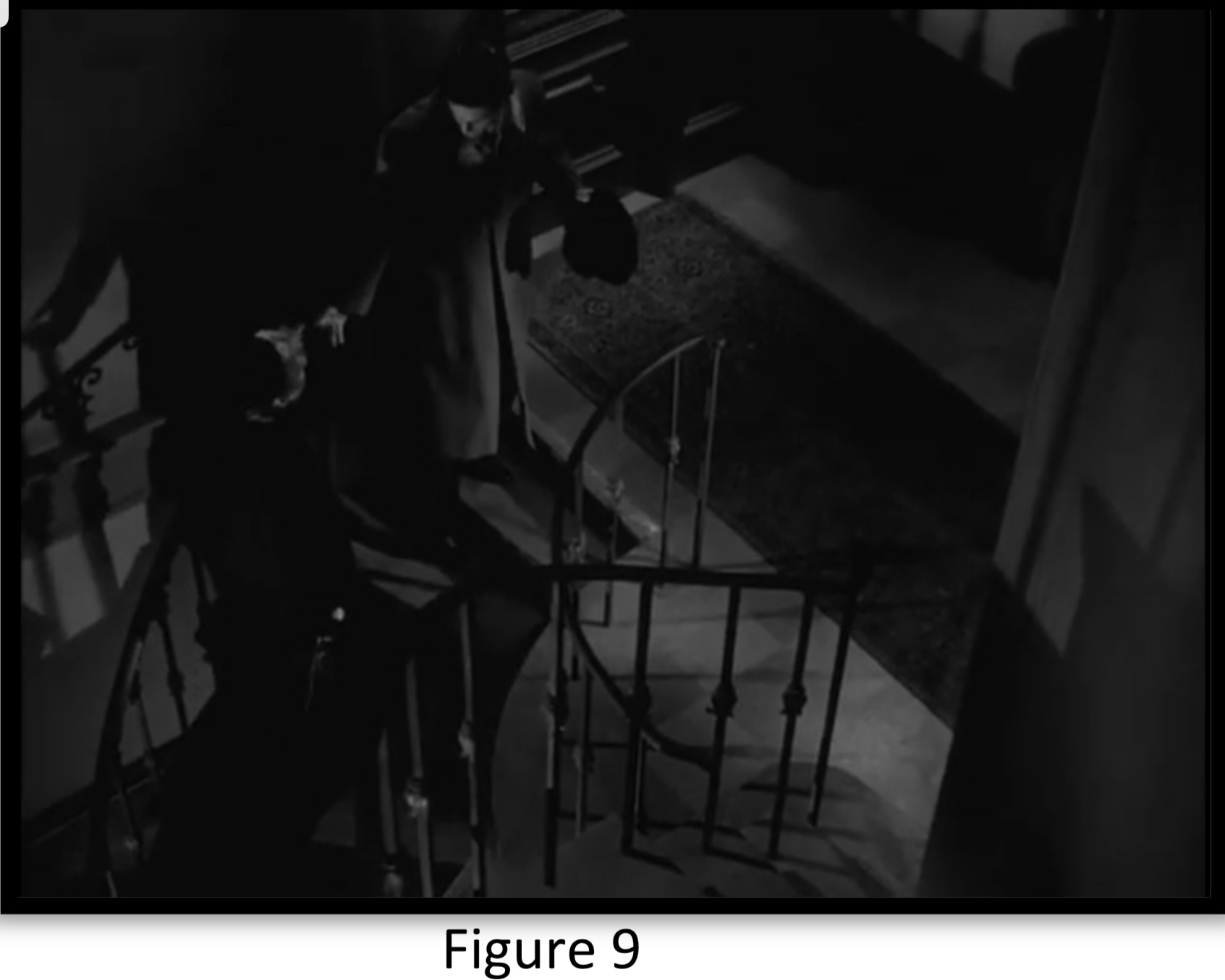
Further into the film, the director gives the audience the exact same shot, camerawork and movement of the stairs only this time there are different characters. Lisa is now his next victim as she is now the women accompanying him. The use of the repeated shot along with Stefan’s act of waiting at the top and giving her his hand highlights how she’s nothing more to him than the other female companions that passed by as she’s now part of his infinite and ongoing circle illustrated by the stairs. This foreshadows what will happen next as many of his female companions were gone by the next day. The shot only lasts 25 seconds which is a shorter amount of time that could emphasise how the feelings between the two of them will end soon as their relationship is not made to last very long.
Although the stairs are part of the set, they help develop the story and give clues to the audience throughout the film. We might not realise how thoughtful each aspect of a film is until we take out time to look out for them, as nothing is placed accidentally and without a purpose.



 Buzzing Moments
Leave a comment