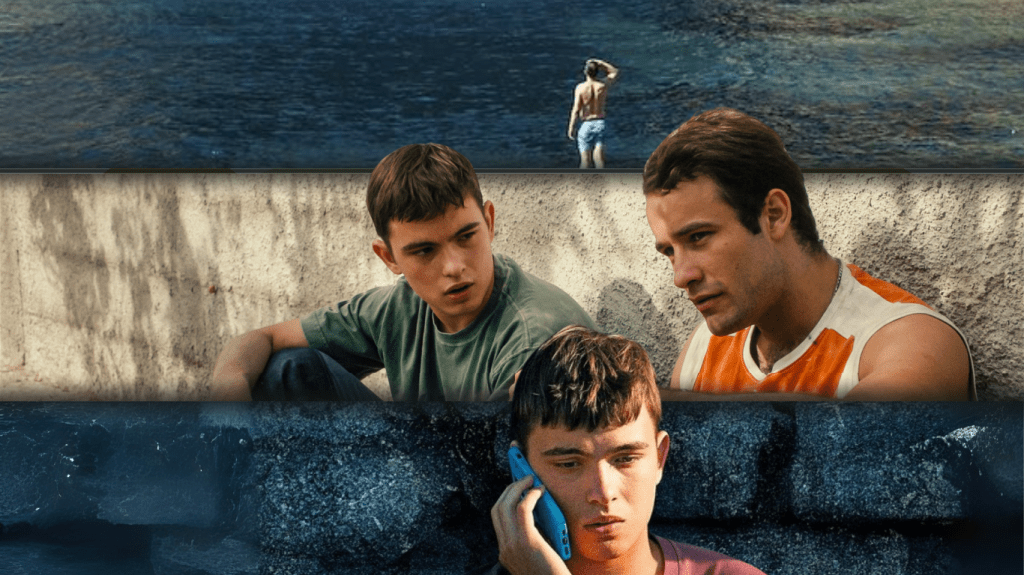
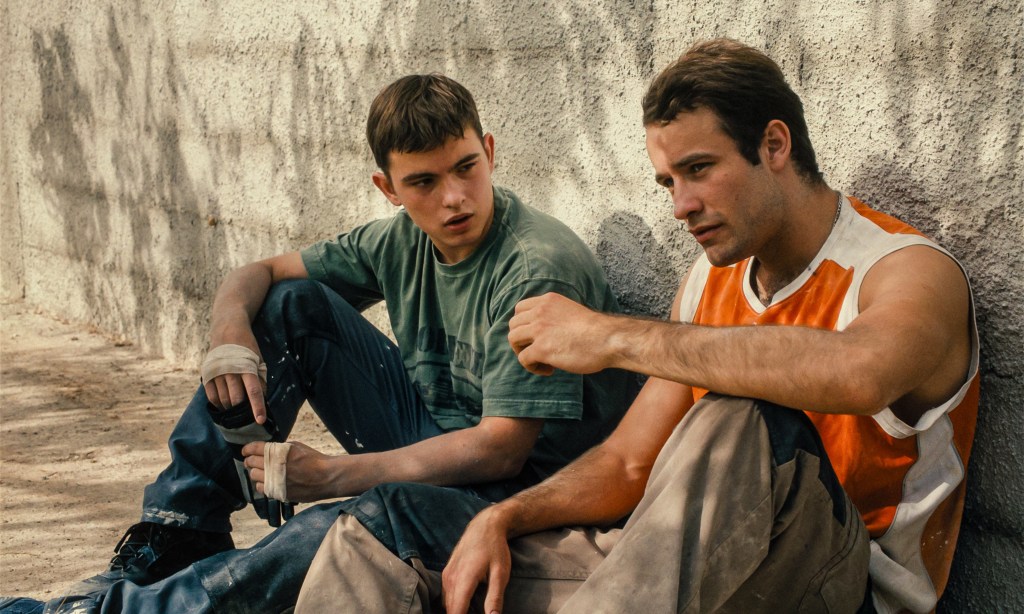
My very first film as accredited press for this year’s BFI London Film Festival was ‘Enzo’ which was also the first film I have seen directed by Robin Campillo.I have to be honest, I didn’t know much about the film going in for the screening only that it was a coming of age drama. The film follows Enzo (played by Eloy Pohu) a 16 year old who challenges both his family’s and society’s expectations by taking a masonry apprenticeship. On the construction site he meets Vlad (played by Maksym Slivinskyi) a Ukrainian colleague who shapes Enzo’s journey as he navigates who he is, who he wants to be and the unspoken pressures he feels.
As always this is your sign that this review contains spoilers. You’ve been warned! When Enzo is first introduced he is on the construction side and I without meaning to made assumptions about who he might be and what his story might be. Enzo’s posture, work and his surroundings made me think of a boy who had no other choice but to do manual labour. The film quickly change that. We discover that Enzo comes from a wealthy family and lives in a house similar to the one he helps build. This raised so many questions for me: Why did Enzo choose this path? Why refuse the privileges that he had from his family? Enzo’s decision to leave school for a masonry apprenticeship isn’t shocking because it isn’t worthy but its shocking because we rarely see it as a choice explored so openly on screen.
Enzo’s parents Paolo (played by Pierfrancesco Favino) and Marion (played by Élodie Bouchez) embody the paradox of parents who love and care for their child deeply but never quite able to understand them. Don’t get me wrong I believe the film portrays his parents as supportive but as Enzo closes himself and his feelings off to his parents it’s harder for them to bridge the gap that has been created. Although Enzo’s bedroom walls are covered in many sketches and drawings when his parents ask him if he wants to be an artist he firmly says no. To me his refusal speaks more about his confusion of not knowing who he is and trying to navigate those feelings as its something I’m sure many of us can relate to at sixteen where everything was too much and overwhelming.
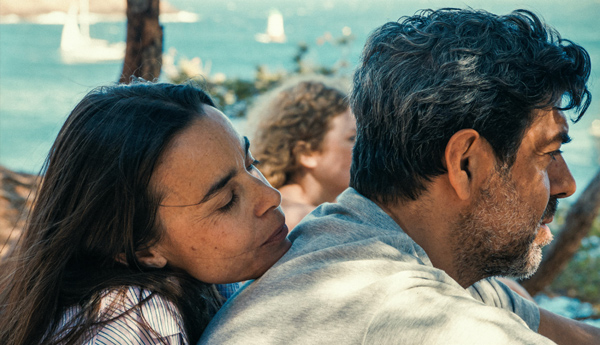
One line that stayed with me from the film is when Enzo’s father says “It’s like he’s drowning in front of us and we are letting him.” I scribbled it down in the dark because I felt it perfectly captures the helplessness of watching someone you love so deeply struggle with things you can’t fix or even understand but wish you did.
The bond between Enzo and Vlad although for different reasons deepens as the film goes on and I found myself struck by their contrasts. To me it felt like Enzo wishes to be seen as more than a child similar to how Vlad is seen on the construction site. On the contrast Vlad wishes for the kind of security and care Enzo’s family represents. It feels like they are mirrors of what the other doesn’t seem to have but wishes for. Throughout the film I found myself searching for answers: Why is Enzo like this? What caused this? But the film reminds us that sometimes there isn’t an explanation. Struggles don’t always fit into a narrative we can fully understand. I feel that this film highlights that what matters isn’t solving someone’s problems but being present for them without judgment the same way Enzo’s family and Vlad have been there for Enzo.
Maybe I’m reading too much into the film but I think the pacing was done on purpose. It felt slower than what we often see in coming of age stories but that slowness gave us time to sit with Enzo’s uncertainty instead of rushing past it. I have to admit at times I did find myself uncomfortable and impacting but then I realise this is the point. We are meant to feel some of what Enzo feels that restless waiting for answers that seem to take forever to arrive. I feel this choice from Campillo makes the film not just something you watch but something you experience because it’s not trying to explain Enzo to us and his feelings but it’s asking us to sit with him, to feel the weight of his silence and to understand that even in stillness there’s a whole world happening inside that we don’t know about.
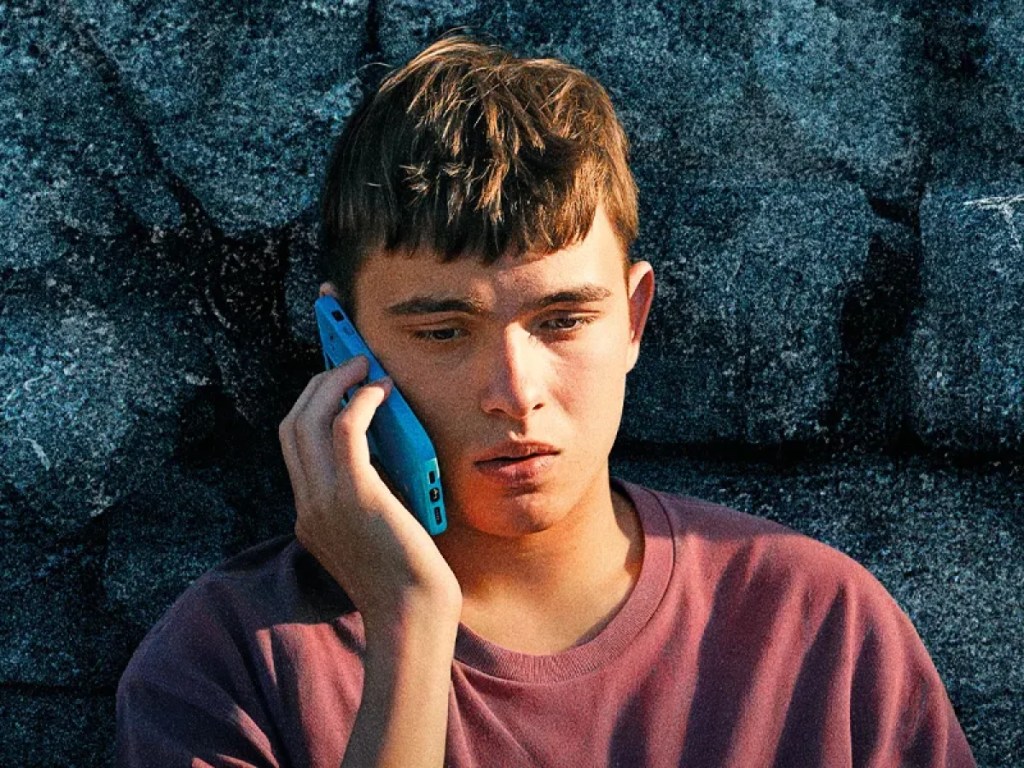
The ending is neither happy nor tragic but real. On the surface it feels that Enzo seems better surrounded by his family but I left questioning if he really is? Healing as many of us know is never linear and maybe the ending leaves it open for each of us to imagine. And what about Vlad? For me his ending felt devastating. His choice to fight for his country might be noble but it’s not a happy ending. Throughout the film we were reminded of the cruel realities of the world and the importance of standing up for what’s right as no one should have to endure war. The ambiguity of that final call left me wondering: did it end because Vlad hung up or because something worse happened? It unsettled me and served as a reminded that just because we don’t know someone personally who is going through hardship it doesn’t mean it isn’t happening. Vlad’s story stays with you long after the credits roll as it shows that even within a coming of age story the worlds harsh realities are never far away and they play an important part in everyone’s story.
‘Enzo’ stays with you because it doesn’t force answers or dramatic revelations. Instead it captures the quiet weight of becoming, the unspoken struggles and the drifting thorugh uncertainty. It holds onto the quiet truth that we don’t need to fully understand someone’s struggle in order to be there for them. For me, that’s what makes it powerful because it doesn’t ask or show us how to solve Enzo or even Vlad but to simply feel, witness and sit beside them.
I have to say, as my first press screening it reminded me of why I love film as they don’t just end when the credits roll. They stay with you quietly reshaping the way you see the world long after you’ve left the cinema.


 Buzzing Moments
Leave a comment